Claire Davidson on the day one seminars at GoaFest in India: Getting seriously social and the democratization of creativity on a global level

 By Claire Davidson
The 8th South East Asian advertising festival, Goafest, commenced today in iconic Indian style.
Held in Goa, on India’s west coast at the delightful Zuri White Sands Resort, the two day event features numerous key speakers, knowledge seminars, a Marketing Wizards initiative for young delegates, and of course awards for the best of the best, held this evening and again tomorrow night.
The theme for Goafest this year is ‘Just What You Unexpected’.
The key focus here is to celebrate excellence in both creativity and the power of ideas, and with over 3000 delegates in attendance and more than 5000 entries in the awards, we should be in for a fun couple of days.
 Today’s seminars were both interesting and informative. First up was Roger Mulchandani (left), Director of Warc Asia Pacific. Mulchandani’s topic was “Seriously Social”.
He started by telling us that today everybody wants to talk about social media. Everyone has an option on social media. It’s always a hot topic at advertising festivals. Moving beyond the hype research shows that ‘the power of social media is that it is a tactic, looking for a strategy’; advice given to us by the Head of Samsung.
One of Warc’s focuses is on case study analysis, and reporting on smarter social marketing – pertinent as today’s statistics indicate that over half of all marketing campaigns use social media. The key now is to create content that people want to share. Attributes in the studies that made content sharable included the following 7 elements:
Broke rules or taboos;
Enabled users to co-create. Looking at Coca Cola on YouTube, only 10% of content is work commissioned and created by Coke itself. 90% is created by users;
Provided utility by saving time and money. Take the Nike Fuel Band and the company’s current philosophy ‘This isn’t marketing any more. This is how we do business’;
Advocated a cause that provoked or inspired;
Used humour;
Made quirky use of celebrities; and
Deployed media surprisingly;
Consumers need to be able to create what they want, when they want, and the key for clients is getting the brand idea right. Mulchandani touts the following three tips for getting real bang for your social media buck:
1. Focus on content sharing;
2. Use insight to create currency for the audience; and
3. Treat the consumer as the ‘hero’, and not the brand as ‘hero’
TV nowadays has a different purpose. It’s TV + Social. It’s integrated, and not TV or Social. TV is now used to explain things briefly, then direct viewers to somewhere else – ie the digital environment. Digital’s job is to give people things to share, things to do, questions about a brand – to engage them and drive the purchase.
Nick Vale, Global Planning Director for Maxus Worldwide brought us “What Does Great Work Look Like in Our Changing World?” With his key focus on media, communications and ideas, Vale believes our business is going through a very interesting period.
Over time, people have been influenced by word of mouth, followed by broadcast media – starting with the invention of the printing press, then (arguably) climaxing in the US on the night of Feb 28th, 1983 with the highest-ranking TV viewership in history – the final episode of M.A.S.H.

 Since then, messages and communication seemed to be on the decline, until da da da daaaaa Mark Zuckerburg and his Feb 4th, 2004 launch of our good friend Facie. This was the commencement of proper social media as we know it. It was then that we were able to start focusing on the individual, collecting data on the individual, and speaking to the individual directly.
Vale went on to say that with all these streams for communication currently available to us, and all these directions we can currently go in, it can get pretty confusing. There’s a whole lot of not-particularly-useful information out there, lurking around corners or down blind alleys. Some might bring a little bit of fluffy excitement for today, but looking at the sheer amount of data available to us, and avenues for consumer connection, what should we be learning from and developing further?
Vale believes there are 5 key areas we should explore:
1. Movement from big ideas to long ideas. Bigness doesn’t really measure anything. Does it mean good? Strategic? Can it translate across different disciplines? Does it provide the glue to create links? Is it really exciting?
Long ideas are tangible – you can see them and point at them. They aren’t just a couple of words. Nike Plus is a great example, evolving over time to meet Nike’s business needs, and the needs of its consumers. It always has a backbone and Nike can change it, improve it and spin things off it;
2. Digital ideas that live beyond the screen. Cool digital stuff exists off screen as well. Now we’re in the business of augmenting humanity with user-friendly technology that lives amongst us every day and makes our lives better. Nike’s chalkbot is a good example.
3. Storytelling across channels. Smart media planning (with great creative, naturally) will allow a brand to tell a story outside of 30 seconds, and across multiple channels. Understanding which channel can best portray a message, and portray it over a long period of time is the tricky part.
4. Social media at the heart of the campaign. Creating beautifully social ideas, to live socially. Contrasting Mulchandani’s view above, Vale believes you don’t necessarily have to use paid media to direct people to the internet to share it. A good example is the Vodafone / Cricket Australia campaign.
5. From participation to scaled protagonism. We need to encourage people to participate with the brand. This could be an event (such as GoaFest), a promotion or a piece of content that people interact with in some way. Another good example is the Australian Coke campaign in which Coke put consumers’ names on their bottles and cans – making the consumer feel valued and important.
Vale left us quoting Bon Jovi and ‘the more things change the more they stay the same’. He warned us not to get carried away with all the shiny new toys from this era – as the fundamentals remain valid and we can’t lose sight of those. We need thought-provoking, brave commercial ideas, rooted in simplicity.
 Ray Velez, Chief Technology Officer of Razor Fish, spoke about “Transforming Business at the Intersection of Marketing and Technology”, and gave us a
formula to focus on for the duration of his talk: Technology + Media + Creativity = New Brand Experiences.
He says we have a new palette of media, which allows for a conversation. Today the customer has a voice to talk back – it’s no longer a one-way street. This allows us to dream up and enable customer experiences like never before. So how do brands evolve their businesses to change their thinking and embrace this?
Put the customer at the centre. Think of your brand as a service. Reject silos, act like a start-up and embrace diversity;
Your organization must be structured around the customer;
Your strategy must be based on data from actual customer activity. Netflix is the perfect example of this. As they stream video, they are collecting customer data, and ooh hello soon enough we find ourselves all watching House of Cards made just for us;
Incentivize collaboration within company functions and even the consumer; and
Meet the Makers Movement.
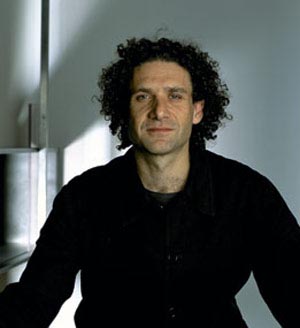 The final speaker for the day was Dave Alberts (left), CCO of MoFilm, who discussed the “Democratization of Creativity”. Alberts refers to Mo Film as the biggest creative department in the world, with a tiny 65,000 filmmakers from 140 countries around the globe. It’s definitely the most successful crowd-sourcing company we have seen, having produced over 15,000 films to date. These filmmakers work with some of the largest clients in the world, including PlayStation, Mountain Dew, Coca Cola, Unilever and P&G.
As with everything we know and love, it starts with a brief. The filmmakers take the brief, make the project with their own money, then present it to the decision makers – who choose five to broadcast or integrate. MoFilm provides a stage for creative people to demonstrate their work – which can be anything from animation to advertising, webisodes to documentaries brought together by events and celebrities.
Democratization of Creativity is the creative that comes from total freedom. You make the film/project that you want to make (novel!).
Traditionally speaking – with a client to an agency to a film director – there may be 30 or 40 people involved in the production process. With MoFilm’s approach, it’s just you. MoFilm prides itself on thinking globally and executing locally, or thinking locally and executing globally.
Interestingly enough, the MoFilm seminar was the least well-attended today. I think everyone here was terrified they might soon lose their jobs if MoFilm continues its rise in the marketplace.
So really, we’ve already had a taste of ‘Just What You Unexpected’ in the lead up to this year’s festival – it’s all been terribly exciting.
The first shock came as Ogilvy – the biggest hitter in India, and dominant power winner of many prior awards – pulled out of the competition. This was followed by Sajan Raj Kurup, chairperson of the Digital Jury at Goafest, withdrawing from judging and yanking all entries and all involvement from his agency – Creativeland Asia.
Kurup’s dramatic decision to step down was apparently ‘an award hunger strike’, to drum up awareness of what he says are the scams occurring within the advertising culture here.
Hmmm maybe he’s talking about the fiasco two weeks ago with JWT India and their sexually inappropriate Ford Figo campaign ‘mistakenly’ being client presented and approved, ‘mistakenly’ published and released for all of us to see, and then ‘mistakenly’ entered into Goafest oopsie… As we know this created waves in the industry on an international scale – with National CCO Bobby Pawar, plus two of his senior executives axed from the agency, as well as the executive at Ford (who endorsed the ads) also let go.
 However judging by the activities today, and the healthy numbers attending the festival, India is on track to put that nasty, negative ‘Unexpected’ juju behind them, and get back on track with a more positive and inspiring connotation. Let’s see what day two delivers tomorrow…
Right now I’m off to see the first Awards Show – tonight’s categories include the Media, Digital, Mobile, Design and Direct Awards.
Claire Davidson (pictured), Executive Producer, ASIA and MENA @ The SweetShop reporting for Campaign Brief Asia at Goafest 2013, Goa, India.