Claire Davidson takes in the seminars at the Cannes Lions Festival of Creativity: Day 5
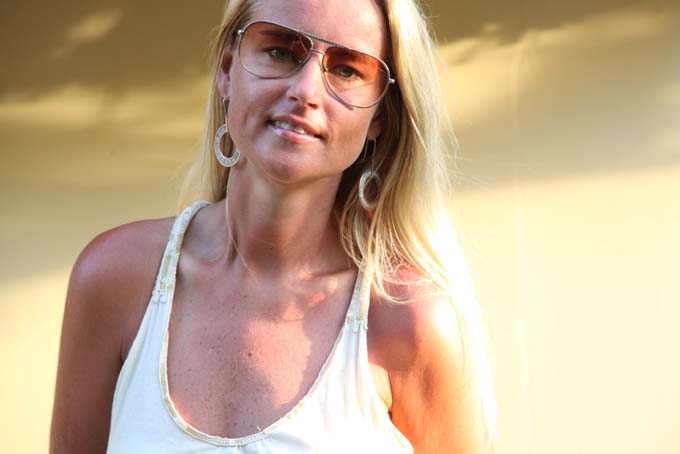 Claire Davidson (left) is in Cannes this year and is reporting exclusively for Campaign Brief Asia. Here’s her round up of the speaker sessions on Day 5.
 Forming a happy contrast to the debauchery of the festival, and tempering the soul-destroying, life-force-sucking, ethical dilemma of a career in advertising (gosh, did I just say that?), there is an opportunity to slip into the Palais des Festivals for a bit of good ju-ju this week.
ACT Responsible is here at the Cannes Lions once again this year, with an exhibition showcasing the very best of responsible creative campaigns – Great Ads for Good Causes.
Now in their 14th year at Cannes, ACT Responsible (Advertising Community Together) is committed to demonstrating how creativity can help the world’s major issues, and reminding us of the role our industry plays in supporting social and environmental issues.
With keywords ‘Alert, Inform, Raise Awareness and Commit’, the exhibition sees 91 agencies from 34 countries showcasing new, innovative and responsible work borne throughout the year for NGO’s, associations and corporations striving to make the world a better place.
You can even vote online for your favourite campaigns as part of the Cannes Tribute 2014, with winners being announced at a special ceremony on Friday.
I feel more virtuous already.
 I took in the forum ‘When Art and Advertising Work In Harmony’ today. Rob Alderson, Editor-in-Chief from It’s Nice, That looked at where art meets advertising in this day and age, viewing it from mostly a content perspective.
Today more and more brands are coming together to work with artists and designers in a bid to create work that will engage and excite consumers in our content-saturated world. A harmonious chord has been struck between art and advertising.
The Drum tells us that as long as there is a need to promote products, the art world will provide both ideas and credibility for many a well-known campaign. Today’s heady mix of digital, experimental and co-creation is where brands will invest in the future and the agencies that can marry these concepts will be the ones rising to the upper end of the next top 100.
We looked at producing media with art as branded content to the world:
• Resonate.
Provide something that is exiting, original, visually arresting, engaging and well executed,
• Relevant
Is this what people want to see online? is it what they want to share?
• Restraint
How branded is the project? Is the balance skewed, is it more branded than content? Is this content diminished as a result.
But creatives, Alderson asked you to also remember that at the end of the day a lot of readers/viewers/users don’t usually give a shit if content is branded. They give a shit if it’s shit.
 Next up I took in “The Augmented Human – The Fusion or Creative and Technological Innovation in Sports” with Professor Jun Rekimoto, Director Deputy, Sony Computer Science Laboratories + Professor, University of Tokyo and Yasuharu Sasaki, Senior Creative Director, Dentsu Inc.
As we’ve been hearing for the past five days here at the Cannes Lions, the impact of technology is continuously accelerating and reaching ever-expanding aspects of humanity. However, we have only just commenced at the beginning. In the future, technology will bring new abilities to humans, be they from communication to productivity to learning.
This is the world of the augmented human. It’s a world where technology augments our ability to perceive, interact, and create, not just in the info-sphere, but in physicality. To augment is to make something greater and enhance capacities.
The augmented human is a new way of using technology. We all know that everyone wants to take advantage of technology. The key, we are told, is to mix this technology with creativity and enhance peoples lives emotionally and physically.
Today we were treated to looking at how a physical activity, in this case sport, will evolve in the era of the augmented human. We looked at motion-sensing, cameras, drones and robots and the impact they can have on us for sport, be it our training, watching or playing. Sheesh… Watching all of these examples made my hungover head even more dizzy than when I had walked into the seminar. I didn’t think that was possible. I was feeling my own out of body experiences just watching these rotating examples.
Yuki Ota joined our panel on stage. Ota was a silver medalist at the Beijing and London Olympics in fencing. He’s working with the team at Dentsu Tokyo Lab using tracking, image analysis and data collection to make fencing more exciting to the viewer.
The future is to augment our senses to realise more exciting sport. Technology should make our lives happier and more exciting. It should create emotion to move people.
 Nice is the New Black. This was the topic of the next seminar brought to us by David Lubars, Chairman, BBDO North America + Creative Officer, BBDO Worldwide. In today’s wounded world, people want to see positives. They want to see glimmers of hope. They want to see some goodness. They want to hold on to something decent.
Doing nice though isn’t enough. We also don’t want to do it all of the time. It can go into the sappy, the maudlin, the hacky and the over sentimental. The chemistry of nice is oxytocin. Oxytocin is a brain chemical that effects our emotions. It’s the trust hormone in all of us.
We need to trigger this in our communication. It’s the difference between good and great. Get the oxytocin into films long before they finish. Bring truth and authenticity. Your X Factor is oxytocin, and that’s what leads to great. It’s about the execution.
Nice can be extremely creative. Small things can add up to so much, and that’s powerful. You can also take the negative and do something positive with it. Do work with feeling. Make it real. Do it with emotion to bring out emotion. Bring your viewer in and make them own it. Make magic for your clients.
 Add these colours to your creative palette. This is what the world wants now. Take social media. Nicer work is shared a lot more. The world wants to create more comfort zones.
We looked at case studies for Guinness, AT&T, Google and Tide. What a nice seminar…
Last up for me today was “How Wizards Are Changing Culture and Turning Tech Into Art”. Jonathan Oliver, Brand Strategy, Microsoft and Rick Barraza, Design Strategy, Quality Experience and Design, Microsoft brought us this forum.
Tech and art are on a collision course. Brands though are now creating culture. Marketing has changed and companies need to think differently. Marketing needs to interact with arts.
Microsoft, Google, Apple, and Facebook are examples of some tech companies who are creating spaces for brands and artists to co-exist. It’s art and science. Fuse art, marketing, culture and technology. Create new languages for creative expressions.
But art is very subjective. Art has the ability to change feeling. Technology on the other hand can’t. But together they can do something interesting, creative and inspiring.
Brands are nothing without meaning, and without leaning into our culture.
Please tell me there are no parties on tonight, my liver just can’t take the pain. See you all tomorrow, same Bat Time…
Claire Davidson, Executive Producer ASIA & MENA @ The Sweet Shop, reporting for Campaign Brief Asia at Cannes Lions 2014.


